
Wearables: Where Do They Go from Here?
Keep up to date on the latest industry trends, company updates and product features.
Over the past few years, wearable devices have emerged from the fringes of the consumer technology market to become one of the hottest trends today. In the last two years alone, sales of wearable devices have increased from $32 million to $115 million, according to a Statista report released earlier this year.
While these numbers show that the wearables market has grown by nearly 400 percent, the types of products available to consumers have not kept pace. Statista’s research indicates that the same five basic products comprise the market: smart watches, health and fitness trackers, cameras, headsets and smart glasses.
Conditions, however, are ripe for the next evolution in wearable technology.
Wearables require broad-range cellular connectivity to meet the mobility demands of their users. Public Wi-Fi networks only cover a small area around the router, resulting in patchy islands of coverage. 3G isn’t a viable option either, being costly and not meeting the requirements for optimizing the data-consuming function of wearable devices. That’s where 4G LTE comes in.
4G LTE is the only connectivity solution that meets the IoT requirements of extended battery life and high performance to provide an optimal and cost-effective wearable experience. In fact, 4G LTE is poised to outpace 3G globally by 2020, according to Zacks Equity Research, presenting a distinct opportunity for the growth of the wearables market.
Given that 4G LTE infrastructure is laying a sturdy foundation for the future of wearables, where does this arm of the IoT market go from here on out?
Here are just three examples of emerging wearable categories:
- Clothing: Clothing companies are getting into the action. From the self-tying shoelaces from “Back to the Future” to temperature-regulating fabrics, and hydration sensors measuring the chemical makeup of your sweat, IoT-connected clothing represents an opportunity for manufacturers to create a personalized experience tailored to the wearer.
- Biowearables: Wearables are being designed to go exceed the intimacy of our clothing, integrating with our very biology. Earlier this year, Sony filed a patent to develop smart contact lenses. The lenses will be controlled with eye movements and blinking with the ability to function like a camera and send pictures to another device. This is just the tip of the iceberg, as nearly every body part will likely be augmented with an IoT solution sometime in the future.
- Swallowables: Another IoT application — this one meant to address healthcare needs —swallowable sensors were recently approved by the FDA. These sensors are embedded in pharmaceutical pills to provide alerts to caregivers when patients take medication. A 2014 study from the U.S. National Library of Medicine and the National Institutes of Health found that non-adherence to a course of treatment leads to an increase of $100 billion to $300 billion in costs to the U.S. healthcare system and to a 10 percent increase in hospitalizations. By having a way to ensure that patients are compliant (particularly those with memory loss or no family or friends to provide support), medical practitioners can rest assured their clients are following their treatment plans.
Connected devices will improve the quality of human life in ways previously unimaginable, and 4G LTE can provide the support to turn concepts into reality.
Related Resources

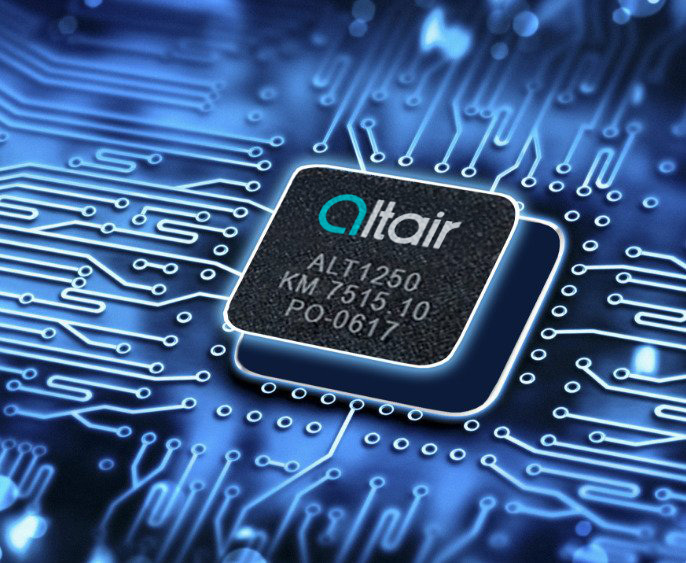
Altair Cellular IoT chipset, ALT1250, is the most integrated, dual mode LTE CAT-M and NB-IoT chipset with 2G fallback.
Success Story

Altair’s Ultra-Low Power Chipset Opens New Opportunities in the Vehicle Telematics Market.
White Papers

LTE-M & NB-IoT are redefining IoT connectivity with superior battery life, enhanced coverage, and cost efficiency—outperforming Cat 1bis in every critical aspect. As future-proof solutions integrated with 5G networks, LTE-M & NB-IoT ensure long-term reliability for your IoT deployments.
Blog

In the next few years, fundamental technological changes in wireless communications are set to revolutionize healthcare applications.