
How to Design IoT Low Power Consumption Applications Part 2: Optimizing the Non-optimal

Keep up to date on the latest industry trends, company updates and product features.
In our last blog post, we looked at the first steps to developing devices for IoT low power consumption devices. This installment will focus on one specific IoT scenario and how it can be optimized for battery life and power consumption:
IoT button: a non-optimal scenario
An IoT button provides a good example of a simple application that will periodically send data, usually less than once a day.
When the button is pressed, the device has to power-up and boot, loading any relevant software and sync with the network. Once it has established the connection, it will send the payload and then have to wait quite some time to be released from the network before idling and finally powering down.
If not designed carefully, device will draw excessive power due to:
- The DNS lookup requires a significant amount of data exchange.
- After the TCP setup, it will have to establish the security session itself (TLS/SSL) – the most costly aspect, in terms of data exchange, requiring a certificate exchange on both sides.
- It will then use either MQTT or HTTP protocols to send the data, which tend to be less efficient because they use DTLS over UDP.
The result is a device which uses some 5,000-9,000 bytes and takes over four seconds to send a very small amount of data.
How can we optimize it?
There are, however, some key techniques which can be employed to optimize the data exchange:
- For the DNS lookup, time can be saved through use of a static IP, or by extending the time to live (TTL).
- The protocol selection can be switched from TCP, which requires the device to remain on waiting for a reply for each package it sends, to a UDP– based protocol; or longer keep-alive timers can be used.
- TLS being the de-facto security protocol today, one could look at using an abbreviated TLS method for re-establishing the connection, the benefit being that after the first connection, the server will remember the device and so won’t have to exchange the certificate again.
- Instead of MQTT and HTTP, there are alternative protocols more optimized for IoT use cases, such as MQTT-SN, a variant of MQTT focused on smaller messages.
As the IoT continues to expand, power consumption will remain the primary concern for device manufacturers. Developers should consider the appropriate LTE technology to suit their needs and adjust protocols as necessary to maximize battery life.
If you missed this webinar, the full recording is still available on demand and can be accessed here.
Related Resources

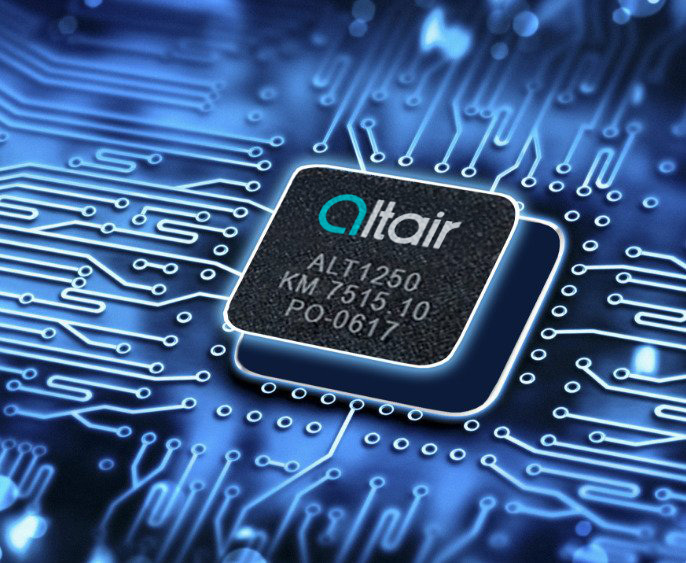
Altair Cellular IoT chipset, ALT1250, is the most integrated, dual mode LTE CAT-M and NB-IoT chipset with 2G fallback.
Success Story

Altair’s Ultra-Low Power Chipset Opens New Opportunities in the Vehicle Telematics Market.
White Papers
LTE-M & NB-IoT are redefining IoT connectivity with superior battery life, enhanced coverage, and cost efficiency—outperforming Cat 1bis in every critical aspect. As future-proof solutions integrated with 5G networks, LTE-M & NB-IoT ensure long-term reliability for your IoT deployments.
Blog

In the next few years, fundamental technological changes in wireless communications are set to revolutionize healthcare applications.